Biopics carry a silent contract with their audience: show us the person behind the persona. In the case of the Michael Jackson movie, that contract is broken. Instead of offering clarity, depth, or emotional truth, it delivers a glossy, sanitized echo of a life that demands far more honesty. For a man whose artistry redefined pop music and whose personal journey sparked global fascination and controversy, the film doesn’t just fall short—it misunderstands its own purpose.
This isn’t a film about Michael Jackson. It’s a performance about a performance, circling the icon without ever daring to step inside.
A Biopic’s First Duty: Truth Over Tribute
The core failure of the Michael Jackson movie lies in its refusal to engage with contradiction. Great biopics don’t just celebrate—they dissect. Think of Bohemian Rhapsody, flawed as it was, at least attempted to show Freddie Mercury’s recklessness and vulnerability. Walk the Line didn’t shy from Johnny Cash’s addiction. Ray confronted Ray Charles’s demons head-on.
The Michael Jackson film, by contrast, treats its subject like a museum exhibit: preserved, polished, and distant. It presents the moves, the voice, the costumes—but not the mind. Not the pain. Not the paradox.
Biopics that succeed do so because they make us feel the weight of their subject’s choices. This one floats above Jackson’s life like a paparazzo’s drone, capturing surface glimmers but missing the gravity that shaped him.
Avoiding the Hard Questions Is a Creative Cowardice
No discussion of Michael Jackson is complete without acknowledging the allegations, the media firestorms, the isolation, and the tragic arc of his final years. These aren’t tabloid distractions—they’re central to understanding the man.
Yet the film sidesteps every uncomfortable corner. The 1993 allegations? Glossed over. The 2005 trial? Reduced to courtroom shadows and hushed dialogue. The plastic surgery, the changing skin tone, the Neverland controversies? Treated like visual quirks rather than symptoms of a deeper unraveling.
This isn’t protection. It’s evasion. And it robs the story of its stakes.
Consider The Last Dance, the Jordan docuseries. It didn’t ignore Jordan’s abrasiveness or gambling habits—it used them to deepen the portrait. The Michael Jackson movie, scared of controversy, chooses sterility. The result? A hero without flaws is not a human. He’s a statue. And statues don’t inspire empathy—they gather dust.
Performance Without Insight Is Just Imitation
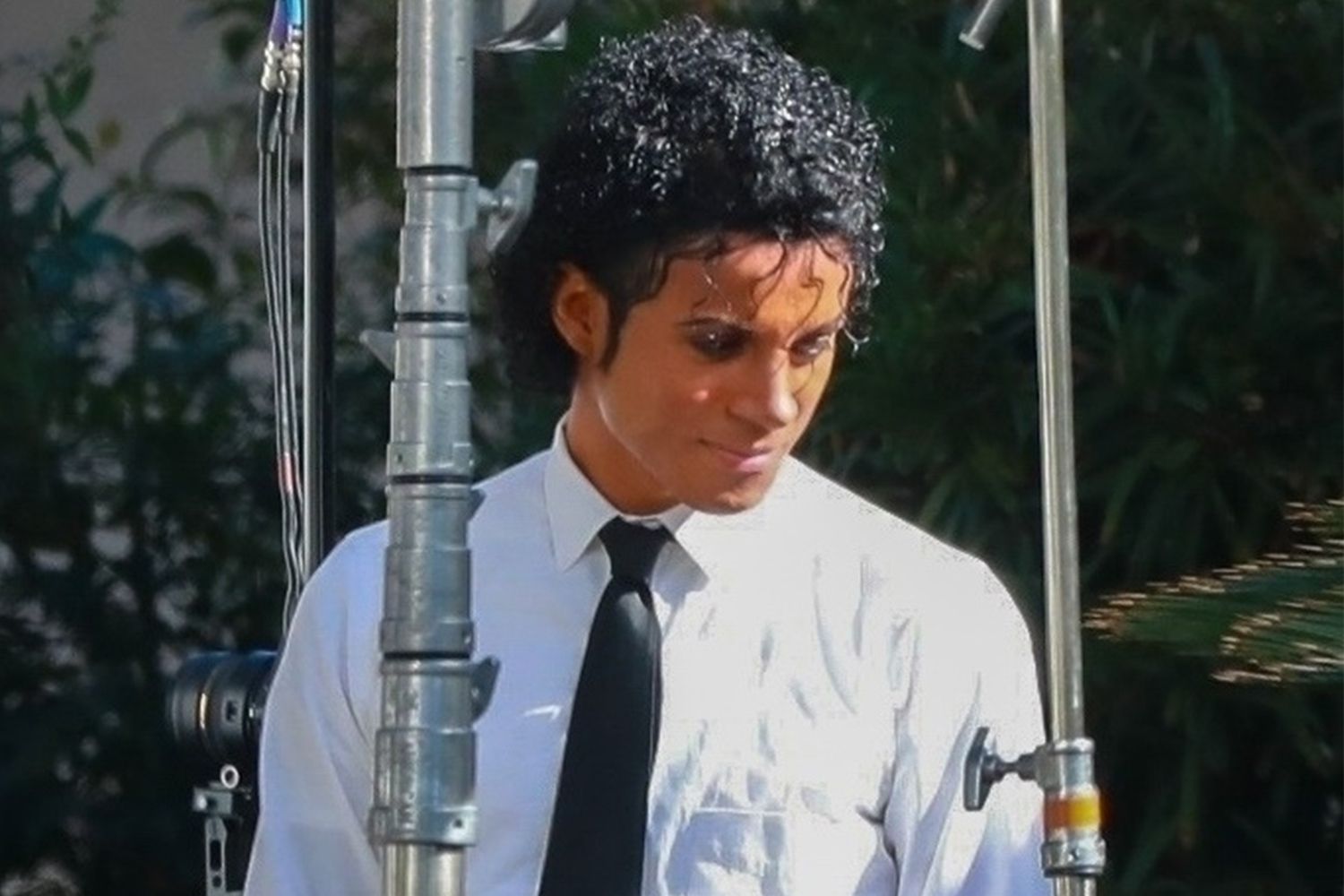
The lead actor delivers an uncanny physical mimicry. The vocal inflections, the staccato dance steps, the glove flick—check, check, and check. But mimicry isn’t acting. And imitation isn’t storytelling.
Watch Capote or The Theory of Everything. Great biopic performances don’t just replicate—they interpret. They let you see the gears turning behind the eyes. Here, the performance feels like a tribute act with a Hollywood budget.

Take the scene recreating the “Billie Jean” moonwalk at Motown 25. Technically flawless. Emotionally hollow. Where was the pressure? The fear of failure? The knowledge that this moment could define—or destroy—his solo career? The film shows us the spectacle, but never the sacrifice.
A biopic should make you feel why a moment mattered. This one settles for showing you that it happened.
Structure Over Substance: A Timeline, Not a Story
The film follows a predictable cradle-to-grave arc: child star, breakout success, peak fame, decline, death. It’s a template so overused it might as well come with a warning label.
But life isn’t a Wikipedia entry. Neither should a biopic be.
Compare it to I’m Not There, Todd Haynes’ experimental Dylan film, which used multiple actors to embody different facets of the artist. Or Control, the Joy Division biopic that focused on a narrow, tragic window but revealed everything.
The Michael Jackson movie mistakes chronology for coherence. It strings events together like beads on a necklace, but never asks what the pattern means.
Why did he retreat into Neverland? What drove the vocal tics, the reclusiveness, the childlike affect as an adult? The film notes these traits but never explores their roots—abuse, control, fame from age five. Family dynamics with the Jacksons are reduced to shouting matches in rehearsal rooms, not psychological studies.
Without insight, a timeline is just trivia.
Music as Backdrop, Not Revelation For a film about one of history’s greatest musical innovators, the use of music is shockingly passive. Songs appear as hits on a greatest-hits reel, not as expressions of inner life.
“Man in the Mirror” plays during a montage of charity events—but what does Jackson feel? Is he sincere? Guilty? Performing again? The film doesn’t say.
“Smooth Criminal” bursts in during a dance sequence. Cool? Yes. Meaningful? No. Where’s the context—the fear of surveillance, the paranoia, the sense of being hunted?
Even 8 Mile, a fictionalized biopic, used music to expose Eminem’s insecurities and rage. Here, the songs are decorative, not diagnostic.
A great music biopic uses sound to advance character. This one uses character to sell songs.
The Danger of Myth Preservation
There’s a quiet agenda running beneath the film: protect the legacy. But legacy isn’t strengthened by silence. It’s validated by honesty.
By refusing to confront Jackson’s complexities, the film doesn’t honor him—it diminishes him. It reduces a tormented genius to a brand: MJ, the logo, the pose, the legacy product.
Imagine a biopic of Walt Disney that ignored his anti-union stance. Or a Lennon film that skipped his abusive early years. We’d call them dishonest. Why is Jackson afforded kid gloves?
Fans don’t need a saint. They need a story that respects their intelligence. The truth—that Jackson was a brilliant artist and a flawed, possibly damaged man—is not mutually exclusive. In fact, it’s the only version worth telling.
The film’s attempt to shield Jackson from scrutiny ultimately disrespects his impact. Greatness isn’t defined by perfection. It’s defined by influence, innovation, and the human cost of both.
What a Better Biopic Would Have Done
A courageous Michael Jackson movie might have:
- Opened not with the Jackson 5, but with the 2005 trial, then flashed back to trace how a child entertainer became a man on trial.
- Used Jackson’s own words from interviews, letters, or the Living with Michael Jackson documentary to create an unreliable narrator effect.
- Given space to those who loved and criticized him—family, employees, accusers—without needing to “solve” the contradictions.
- Explored the racial context of his changing appearance and media treatment.
- Showed the mechanics of his creativity—how he built a song from a hum, a beat, a mood.
It could have been messy. Unsettling. Unforgettable.
Instead, we get a corporate-approved highlight reel.
Conclusion: Biopics Demand Courage, Not Custodianship
The failure of the Michael Jackson movie isn’t that it’s inaccurate. It’s that it’s afraid. Afraid of controversy. Afraid of complexity. Afraid of showing a genius who may also have caused harm.
Biopics don’t exist to preserve legends. They exist to dismantle them—and rebuild them, truthfully.
Michael Jackson deserved better. Audiences deserve better. The next time a studio greenlights a music legend’s life story, they should remember: reverence without reckoning isn’t tribute. It’s evasion.
Make the film that asks hard questions. Cast an actor who can hold paradox. Trust the audience to handle truth.
That’s how you do justice to a king—not by kneeling, but by seeing him clearly.
FAQ
Why is the Michael Jackson movie considered a biopic failure? Because it avoids emotional depth, sidesteps controversy, and prioritizes image over truth, failing to explore the complexities of Jackson’s life and legacy.
Does the movie address the abuse allegations? Only minimally and indirectly. It references legal troubles but avoids substantive exploration of the accusations or their impact on Jackson’s psyche.
Is the lead actor’s performance good? Technically impressive in mimicry, but lacking emotional depth or psychological insight into Jackson’s inner world.
How does it compare to other music biopics? Unlike Ray, Walk the Line, or Bohemian Rhapsody, it shies away from personal flaws and addiction, making it less authentic and dramatically inert.
Could a better Michael Jackson biopic be made? Yes—by embracing contradiction, using diverse perspectives, and focusing on psychological truth rather than myth preservation.
What should a Michael Jackson biopic include? A nuanced look at his childhood, creative process, racial identity, relationships, legal battles, and the toll of fame—without oversimplifying or sanitizing.
Was the film approved by the Jackson estate? While not officially confirmed, the film’s protective tone and selective storytelling suggest close estate involvement or approval.
FAQ
What should you look for in The Michael Jackson Movie Misses the Soul of a Biopic? Focus on relevance, practical value, and how well the solution matches real user intent.
Is The Michael Jackson Movie Misses the Soul of a Biopic suitable for beginners? That depends on the workflow, but a clear step-by-step approach usually makes it easier to start.
How do you compare options around The Michael Jackson Movie Misses the Soul of a Biopic? Compare features, trust signals, limitations, pricing, and ease of implementation.
What mistakes should you avoid? Avoid generic choices, weak validation, and decisions based only on marketing claims.
What is the next best step? Shortlist the most relevant options, validate them quickly, and refine from real-world results.